Panglao is the small island off southwestern Bohol that now does most of the greeting. Bohol-Panglao International Airport sits on its edge, two bridges connect it to Tagbilaran, and the majority of first-time visitors unpack here rather than in the city. The draw is straightforward: a swim-friendly coast, a compact strip of restaurants and dive shops at Alona Beach, and enough quiet shoreline elsewhere if you want to sleep away from the music. Inland Bohol — the Chocolate Hills, the tarsiers, the Loboc River — is a day trip, not a different holiday.
This guide covers how to use Bohol’s beach island well: which shores are worth your time, how diving at Balicasag and the nearby sandbars works, how many nights to stay, and how Panglao sits next to a quieter alternative such as Anda. For the wider island, start with the visit Bohol overview and the Bohol airport transfer notes; what follows is about staying on Panglao itself.
Alona Beach and the Quieter Shores
Alona is the practical heart of Panglao: a curved bay of pale sand, a dense line of restaurants, bars and dive centres, and the easiest place to find a sunset drink or a last-minute snorkel trip. It is also the noisiest and the most built-up. If you want to walk out of your hotel and eat well without a taxi, Alona is still the default. If you want to sleep to the sound of water rather than a playlist, look at the coasts a short drive away and come to Alona for a meal. The beach itself is pleasant for a swim in the dry season, though seaweed and a narrower strip appear at times, especially when the wind is the wrong way, and vendors can be persistent in the late afternoon.
Around the rest of the island the mood changes quickly. Dumaluan is a longer, less crowded stretch with shallow water that suits families. Doljo, toward the west, is known for wide sand, gentle water and sunsets, with more space between buildings. Bikini, Momo and Danao are smaller and quieter still, better for a morning swim or a laid-back hotel than for a night out. You do not need to beach-hop every day; pick a base that matches how you like to eat and sleep, then take one or two short drives to see a different shore. A Panglao and Tagbilaran walking guide helps if you also want a few hours in the town markets rather than another swim.
Restaurants, dive shops and a short walk to the sand. Choose this if you want everything close, and accept that it will not be the quietest night.
More room to swim and a slower evening. You will use a short ride to reach Alona’s denser dining strip.
The usual boat day from Panglao: a marine sanctuary for snorkeling or diving, and a sandbar stop if the tide and crowds allow.
Diving, Snorkeling and Boat Days
Panglao is a genuine dive base, not just a beach with a mask for hire. Balicasag Island, a short boat ride south, is the headline: a marine sanctuary with steep walls, good coral and a decent chance of turtles, and sometimes dolphins on the crossing. Divers usually plan two or three dives; snorkelers can still enjoy the sanctuary shallows if they are comfortable in deeper, clearer water than a hotel beach. A typical Balicasag snorkeling excursion is a half or full day from Alona. Virgin Island is a sandbar rather than a dive site, photogenic at the right tide and busy when several boats arrive at once. Pamilacan, farther out, is the usual departure point for a dolphin and whale-watching morning in season; go with a crew that keeps a proper distance and does not chase animals for a photograph.
Fun dives from Panglao commonly fall in a planning range of about USD 40 to 70 per dive including tanks and weights, with sanctuary fees on top at Balicasag. A snorkel boat day is often in the USD 30 to 60 range per person on a shared trip, more for a private boat. Those are planning figures, not a quote. If you are new to diving, a resort course is widely available, but do not pack a first open-water course, a countryside day and a late arrival into the same forty-eight hours. The sea is the point of Panglao; give it a clear morning.
- A Chocolate Hills and tarsier day, or a broader Bohol countryside tour, is enough inland for most stays.
- Multi-day routes such as Cebu and Bohol Classic or Bohol and Siquijor already build in the island hop.
- Other short days are listed under Philippines excursions.
Day Trips Inland, and When to Leave the Beach
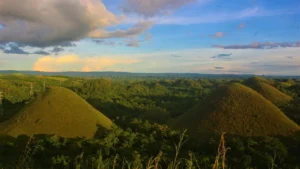
The classic inland day from Panglao is the countryside loop: the Chocolate Hills and a tarsier sanctuary, often with a Loboc River cruise and a lunch on the water. It is a full day if you do it properly, and a strained one if you also try to dive in the morning. Start early, use a full-day driver in Bohol, and be back for a late swim rather than a second excursion. The hills are at their best in clear weather; in the wetter months they can sit under low cloud, which is not a reason to skip Bohol, but it is a reason not to make that one day the whole point of the trip.
Anda, on Bohol’s east coast, is the other useful contrast: a quieter, longer beach area about two and a half to three and a half hours away. It works as a day trip, and it works even better as a two-night add-on if you have the time, which we cover in the Anda beaches guide. If you only have four nights on Bohol, stay on Panglao, do one reef day and one inland day, and leave Anda for a longer visit. If you have a week, splitting the stay is one of the more satisfying ways to see the island without changing hotels every night. A beach and cave-pools excursion is the middle option when you want a look without relocating.
Where to Stay, and How Many Nights
Four to six nights is the comfortable range for most visitors who want both the water and one inland day. Three nights works if you are already diving certified and do not mind a packed schedule. A week lets you add Anda, or simply have two mornings where nothing is booked. Stay on or just behind Alona if restaurants and dive boats matter most; stay at Dumaluan, Doljo or a quieter cove if the room and the swimming are the holiday. Mid-range rooms often sit in a planning range of about USD 50 to 140 a night, with simple places below that and larger resorts above it, moving with the season. Browse Bohol accommodations or the nationwide accommodations page if you want the stay arranged with transfers.
The airport is on Panglao, which is the island’s great logistical advantage. A transfer to Alona Beach is short; Doljo and the western hotels take a little longer but are still far easier than a first night in Tagbilaran with another move the next day. Tagbilaran is useful for a ferry or a city errand, not as a beach base. If you are combining Bohol with Cebu or Siquijor, put the Panglao nights in a block rather than splitting them around a mainland hotel. The Cebu guide and Siquijor guide help with that sequence. Families often prefer Dumaluan’s shallower water; our notes on the Philippines with kids are consistent with that choice.
Practical Tips and Common Mistakes
The usual mistake is to stay only on Alona, fill every morning with a tour, and leave feeling that Panglao was “busy but fine.” Build in an unscheduled beach morning. The second mistake is to underestimate distances on a small island: a late airport arrival, a dinner in Alona and a hotel in Doljo is easy with a pre-booked car and annoying without one. Hire a scooter only if you are used to local roads and do not plan to drink; a driver for the countryside day is the safer default. ATMs exist around Alona, but they can run dry on weekends, so keep some cash for boats and small restaurants.
The most reliable swimming and diving months are December to May. June to October still has many clear days, with a higher chance of rain, cancelled boats and more seaweed on some beaches. Check the best time to visit the Philippines if your dates are flexible, and leave a spare morning in the wetter season so a Balicasag day can move. Pack a rash guard, reef-safe sunscreen and a dry bag, as you would anywhere in the Visayas; the packing list and the travel costs guide fill in the rest of a Bohol stay.
Frequently Asked Questions
Is Panglao the same as Bohol?
Panglao is an island municipality of Bohol, connected by bridge to the mainland and home to the airport. Most visitors base themselves here and go inland for a day. Saying you are “going to Bohol” usually means a Panglao hotel plus the Chocolate Hills, not a stay in Tagbilaran.
How many nights should I stay on Panglao?
Four nights is a sound minimum if you want a reef day, an inland day and a morning that is not booked. Six nights is more relaxed. Three nights works for a focused dive trip or a short add-on after Cebu, as long as you do not also try to reach Anda.
Is Alona Beach a good place to stay?
Yes, if you value restaurants, dive shops and a short walk to the sand. Choose a quieter coast if you are light-sleeping, travelling with small children, or came for a still evening. Many visitors eat in Alona and sleep elsewhere, which is an easy compromise with a short ride.
Can I visit the Chocolate Hills as a day trip?
Yes, that is the standard arrangement. Leave in the morning, include a tarsier sanctuary and, if you wish, a river lunch, and be back by late afternoon. It is a longish day on winding roads, so a private driver is more comfortable than a series of informal rides.
Is Panglao good for non-divers?
Yes. The beaches, a Balicasag or Virgin Island snorkel day, and the countryside loop are enough for a satisfying stay. Diving is a bonus, not a requirement. If you want even quieter water and fewer shops, look at Anda or a shorter add-on there after a few nights on Panglao.
Get Your Free Custom Philippines Tour Quote Today!
Tell us how many nights you have on Bohol, and our local team will set a Panglao base with a reef day, an inland loop, and transfers that match your flights.
Browse Multi-Day Tours Explore Short Excursions