Philippines festivals are not a side note to a holiday. In January a street in Cebu can be a river of dancers; in October Bacolod fills with smiling masks; in May a small Quezon town covers its houses in fruit and coloured rice. A fiesta can be the best day of a trip, and it can also be the day you cannot reach your hotel, cannot find a quiet meal, and cannot get a flight out. The useful skill is to decide, before you book, whether the festival is the reason for the journey or a coincidence you need to plan around.
This is not a ranking, and it is not a complete calendar of every town fiesta in the archipelago. It is a planning guide to the events travellers most often try to see — or accidentally land in — and to the practical effects on rooms, roads and island connections. For month-by-month weather, use the best time to visit page; for cyclone months, use the typhoon season guide. A festival date does not cancel a weather forecast, and some of the best-known events sit in the drier calendar, which is why they are so busy.
When the Best-Known Festivals Fall
January is the busiest festival month many visitors meet. Sinulog in Cebu, usually on the third Sunday of the month, honours the Santo Niño with a grand parade, a week of events and a city that is full well before the main day. Ati-Atihan in Kalibo, Aklan, is close in spirit and calendar, and it sits on the same side of the country as Boracay, which is why a beach plan in mid-January can collide with a fiesta you did not know you had booked around. Dinagyang in Iloilo follows in the same season, typically the weekend after Sinulog, and it gives the western Visayas its own January peak. If you want one of these, build the week around it. If you want a quiet first look at Cebu or Iloilo, pick a different weekend.
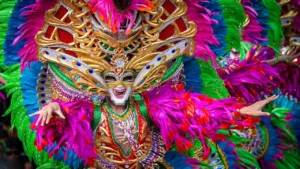
February brings Panagbenga, Baguio’s flower festival, which fills the highland city with parades and the kind of traffic the ridge is famous for. May has Pahiyas in Lucban, Quezon, a harvest thanksgiving whose decorated houses are the point of a long day trip from Manila. August is Kadayawan in Davao, a festival of the harvest and of Mindanao’s cultures, and a reason to be in the city rather than only on Samal. October is MassKara in Bacolod, a carnival of masks and street dancing that pairs naturally with a visit already planned around The Ruins and the city’s food, as the visit Bacolod guide sets out. Holy Week, whose dates move, brings Moriones in Marinduque and a nationwide change of pace: beaches and hometowns fill, some offices close, and domestic flights can be scarce.
Christmas and New Year in the Philippines are a season, not a day, and they will shape December travel whether or not you are trying to “do a festival.” Town fiestas happen all year, often on a patron saint’s date, and they can close a street or fill a pension on an otherwise ordinary Tuesday. Ask, closer to the time, if your dates coincide with a local fiesta, especially in a small town.
Cebu, Kalibo and Iloilo in quick succession. Excellent if the parade is the point; crowded if you only wanted a quiet island start.
A day in Lucban from Manila, or a Davao week that has a reason to be in the city as well as on the water.
A natural pairing with Negros, The Ruins and a western Visayas plan, if rooms and flights are booked early.
Build the Trip Around a Festival, or Keep Your Distance
If the festival is the point, arrive at least a day early, stay a night after the main parade, and treat the peak day as a full day with no onward ferry. Book the hotel before you book anything else; rooms closest to the route sell first, and a “we will find something on arrival” plan is how people end up far outside town with no way back after the streets close. In Cebu, that might mean a city hotel and a later transfer to Moalboal or Bohol, not a same-night hop. In Bacolod, it might mean staying through the weekend and only then crossing to Dumaguete or Siquijor. Read the Cebu City, visit Cebu, visit Iloilo and visit Davao pages for the rest of the stay, so the fiesta is a centrepiece rather than the only hour you planned.
If the festival is not the point, shift the dates. A week later in Cebu is still Cebu. A Boracay holiday can sit on either side of Ati-Atihan rather than on top of the Kalibo rush, which also affects the airport you may be using. Holy Week is a poor moment for a first, tightly connected island itinerary unless you enjoy crowds and have booked every night and every flight. The Visayas itinerary and the 10-day country plan both work better when a parade is a chosen extra, not a surprise in the middle of a transfer day.
Watching a parade is usually free at street level, which is why people pack the barriers hours ahead. Paid seats or organised vantage points exist for some events and are worth it if you want a calmer view or are travelling with children or older family, as the Philippines with kids guide would suggest. A MassKara and culinary excursion is the kind of arranged day that includes the practical help you will want in a crowd. Do not bring a full-size suitcase into a packed route, and agree a meeting point if your group splits.
- A Cebu or western Visayas trip can include Sinulog or Dinagyang as a planned opening, then continue with a Cebu and Bohol or western Visayas route once the streets reopen.
- MassKara sits naturally with time in Bacolod and Negros; Kadayawan with a Mindanao or Davao stay.
- Shorter outings on ordinary days are listed under Philippines excursions.
Flights, Hotels and What a Festival Actually Costs
The hidden cost is availability, not a ticket at the gate. Domestic flights into Cebu in Sinulog week, into Kalibo in Ati-Atihan week, and into Bacolod in MassKara week rise and disappear earlier than in an ordinary month. Hotel rates in the city centre can double or simply sell out. As a planning picture, a mid-range room that might sit around USD 50 to 120 on a quiet week can move well above that band, or force you into a less convenient neighbourhood. That is a planning observation, not a quote; book early or change the date. The travel costs and domestic flights guides still apply, with a festival multiplier on the first and last days.
Roads close. Airport transfers take longer. A private driver can help you reach a drop-off at the edge of a closed zone, and cannot magic a car through a parade. Eat before you go to the route, carry water, and do not count on a restaurant reservation in the exact block of the procession. If you have a same-day ferry after a morning parade, you are betting against both the crowd and the timetable.
Where to Stay, and Practical Tips
Stay as close as you reasonably can to the event if you are there to see it, and slightly away from the noisiest corner if you still need to sleep. In Cebu, a city hotel for the festival nights and a later beach or south-Cebu stay is cleaner than using Moalboal as a daily commute. In Bacolod, a central room for MassKara, then The Ruins or Silay at a quieter pace. In Davao, a city base for Kadayawan, with Samal as a separate chapter. Browse Cebu, Bacolod, Iloilo and Davao accommodations, or the nationwide accommodations page, and say the festival dates in the request so the stay is chosen with closed streets in mind.
Confirm dates every year; organisers sometimes shift a parade for a weekday, a church calendar or a local decision. The main mistake is arriving on the morning of the main day without a room. The second is leaving on a tight evening flight. The third is assuming a beach island will be quieter because the festival is “in town” — Kalibo and Caticlan will tell you otherwise in January. Pack light for the parade day, keep a hand on your bag, and give the city an extra night. A festival is one of the best reasons to visit the Philippines. It is also one of the worst surprises to meet unprepared.
If your dates are flexible, pick one event, build a short city stay around it, and then continue with the region as you would on any other trip. That combination — a fiesta, then a proper island or heritage plan — is usually more satisfying than trying to collect several festivals in a single month.
Frequently Asked Questions
What is the most famous festival in the Philippines?
Sinulog in Cebu is the one international visitors hear about first, alongside Ati-Atihan in Kalibo and MassKara in Bacolod. “Famous” depends on the region; many towns have a fiesta that matters more locally than any of these. Choose by where you already want to be, and by whether you want a crowd.
Can I visit Cebu or Boracay during festival week?
Yes, if you book early and accept the crowds, or if you stay outside the peak parade day. If you want a quiet beach start, shift the week. Kalibo’s Ati-Atihan in particular spills into the same travel system Boracay uses.
Are festival parades free to watch?
Street viewing is generally free and crowded. Some events offer paid seats or organised viewpoints, which are worth considering if you want space, shade or a reliable place to stand.
How far in advance should I book?
As soon as your dates are fixed, especially for hotels near the route and for domestic flights. Festival weeks are a bad moment to be flexible only on arrival.
What if my dates clash with a fiesta I do not want?
Move a day or two, or stay in a different base and visit the city after the parade. Do not try to make a tight island connection through a city whose streets are closed.
Get Your Free Custom Philippines Tour Quote Today!
Tell us whether a festival is the reason for your trip or something to work around, and our local team will shape the city nights, rooms and onward flights to match.
Browse Multi-Day Tours Explore Short Excursions